


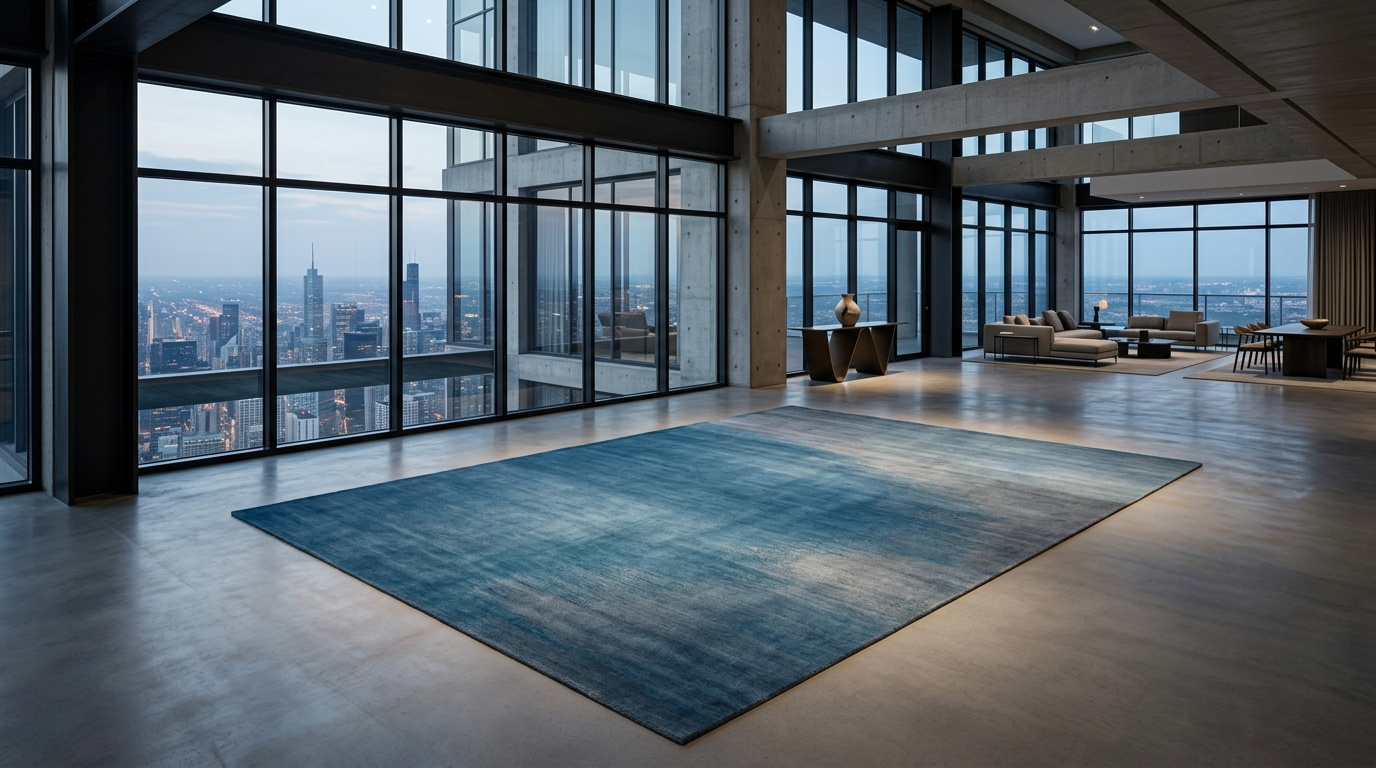
Choosing the right rug size is one of the most consequential decisions in interior design — and one of the most common sources of regret. A rug that is too small for a room looks like an afterthought. The right size rug anchors the space, defines zones, and makes everything around it look intentional.
Living Room
The living room is where rug sizing matters most, because the rug establishes the footprint of your seating area. There are three reliable approaches:
All legs on: The most polished look. Choose a rug large enough that all furniture — sofa, chairs, coffee table — sits entirely on the rug. This typically requires a 9x12 or 10x14, depending on the size of your seating arrangement.
Front legs on: A practical compromise that works well in most rooms. The front legs of the sofa and chairs rest on the rug, while the back legs sit on the floor. An 8x10 usually works for a standard living room layout.
Coffee table only: In smaller spaces or open-plan rooms, a 5x8 or 6x9 rug placed under the coffee table can define the seating zone without overwhelming the space. This works best when the floor beneath is already attractive — hardwood or stone.
The most common mistake in rug buying is going too small. When you are debating between two sizes, choose the larger one. You will not regret it.
Dining Room
Dining room sizing follows a simple rule: the rug must be large enough that chairs remain on the rug even when pulled out from the table. The standard formula is to add three feet to each side of your table.
A table that seats four (approximately 4x3 feet) needs a rug of at least 8x10. A table that seats six to eight (approximately 6x3.5 feet) calls for a 9x12 or larger. For round tables, measure the diameter and add six feet to determine the minimum rug dimension.
This is not just an aesthetic preference — a chair that catches on the edge of a rug every time someone sits down or stands up is a daily frustration. Size generously in the dining room.
Bedroom
In the bedroom, the rug creates a soft landing when you step out of bed. There are two common approaches:
Large rug under the bed: A 9x12 or 8x10 placed under the bed so that it extends two to three feet on each side and at the foot. This creates a unified, luxurious look and works well in larger bedrooms.
Runners on each side: In narrower bedrooms or when you want to show off a beautiful floor, a pair of 2.5x8 or 3x8 runners placed along each side of the bed provides the same soft landing without covering the full floor.
In either case, the rug should extend far enough past the bed that your feet land on it when you swing your legs out in the morning — at least 18 to 24 inches.
Entryways and Hallways
Runners are the natural choice for hallways. A width of 2.5 to 3 feet works for most corridors, with the length determined by the space. Leave six to twelve inches of floor visible on each side for a clean, intentional look.
For entryways, a 3x5 or 4x6 rug creates a welcoming transition. Choose a lower pile height in these high-traffic areas — 6 to 8 mm — for easier maintenance and better durability.
Common Mistakes to Avoid
- Buying too small. This is the number one error. A rug that floats in the middle of a room without connecting to any furniture looks disconnected.
- Ignoring furniture placement. Always plan the rug size around your furniture layout, not the other way around. Measure the arrangement first, then choose the rug.
- Forgetting about doors. Make sure the rug does not interfere with door swings. Measure the clearance before you commit to a size and pile height.
- Skipping a rug pad. A quality rug pad prevents slipping, adds cushioning, and protects both the rug and the floor beneath it. Always use one.
A rug is the foundation of a room's design. Get the size right, and everything else falls into place.
Need help choosing the right size for your space? Contact our team for a personalized recommendation, or explore our collections to see what is available in the dimensions you need.
Share:
The Difference You Can Feel: Hand-Knotted vs Machine-Made
Bowery Abrash | Bowery Collection