


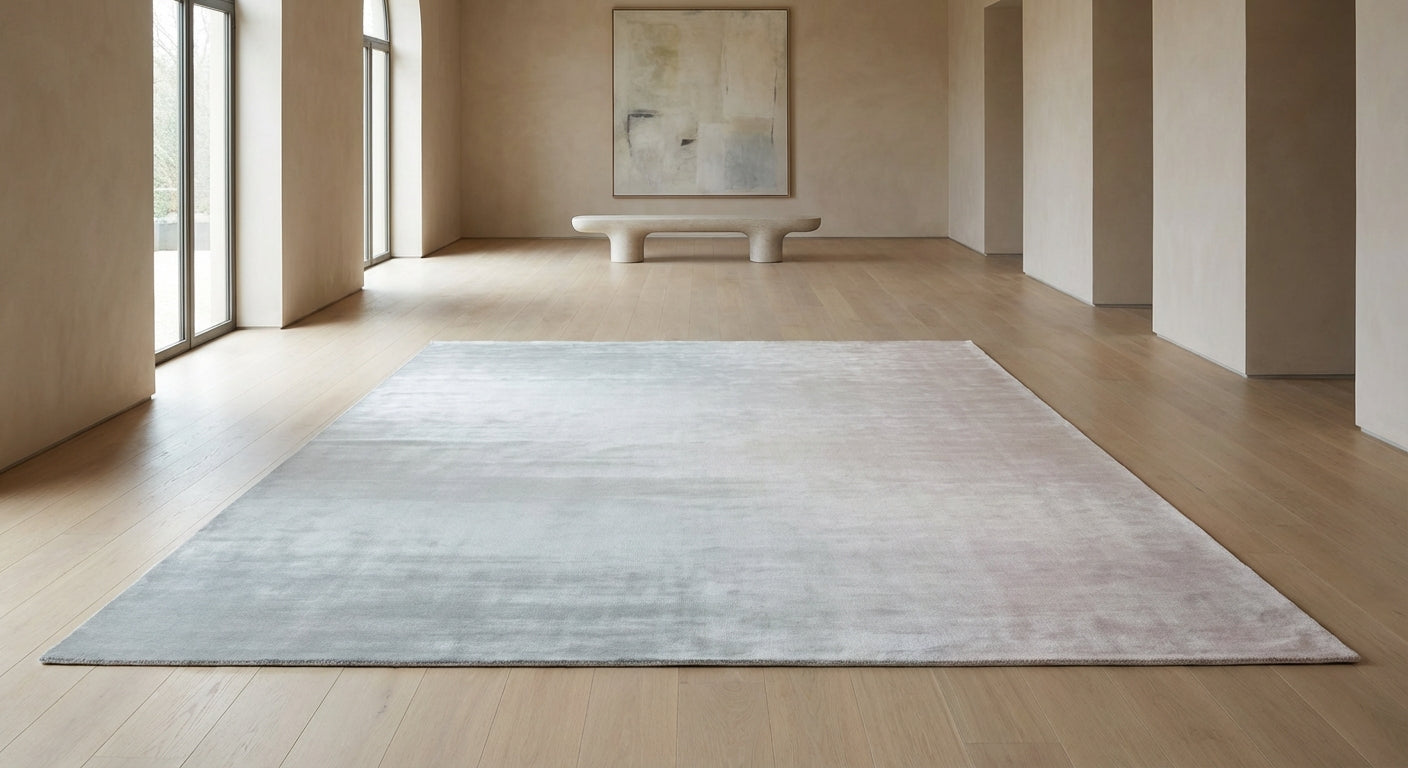
The fiber determines everything. How a rug feels underfoot. How it ages. How it catches light. How long it lasts. Here is what sets our materials apart.
Himalayan Highland Wool
Sourced from sheep grazing above 12,000 feet in Nepal and Tibet, this wool has a longer staple length and higher natural lanolin content than lowland varieties. The result is a fiber that is naturally stain-resistant, incredibly durable, and develops a beautiful patina over decades of use.
We use Himalayan highland wool in our Foundation, Icons, and Sacred collections. It is the backbone of hand-knotted rug making and has been for centuries.
Merino Wool
Finer and softer than highland wool, merino is the fiber behind our Essentials collection. It produces a plush, velvety pile that feels luxurious underfoot. While slightly less durable than highland wool in high-traffic areas, merino excels in bedrooms, studies, and formal living spaces where comfort is the priority.

Mulberry Silk
Silk transforms a rug from a floor covering into a work of art. The fibers refract light, creating surfaces that shift and shimmer as you move around the room. We use Mulberry silk in two ways: as accents within wool rugs (adding luminosity to specific design elements) and as the primary fiber in our Silk collection (200+ KPSI, pure silk, gallery-grade).
Silk rugs require more care than wool. They are best suited for low-traffic spaces and should be professionally cleaned. But for the right room, nothing else comes close.
Blends
Many of our rugs combine wool and silk. The wool provides structure and durability. The silk adds luminosity and detail. A 70/30 wool-silk blend gives you the best of both: a rug that can handle daily life while still catching the light like something out of a gallery.
Share:
The Art of Tibetan Weaving: From Kathmandu to Your Home
Natural vs Synthetic Rug Materials: What You Need to Know